Drainage Correction in Waxahachie
Drainage correction in Waxahachie to control water around your foundation on clay soil. Grading, gutters, and drains that reduce foundation movement.
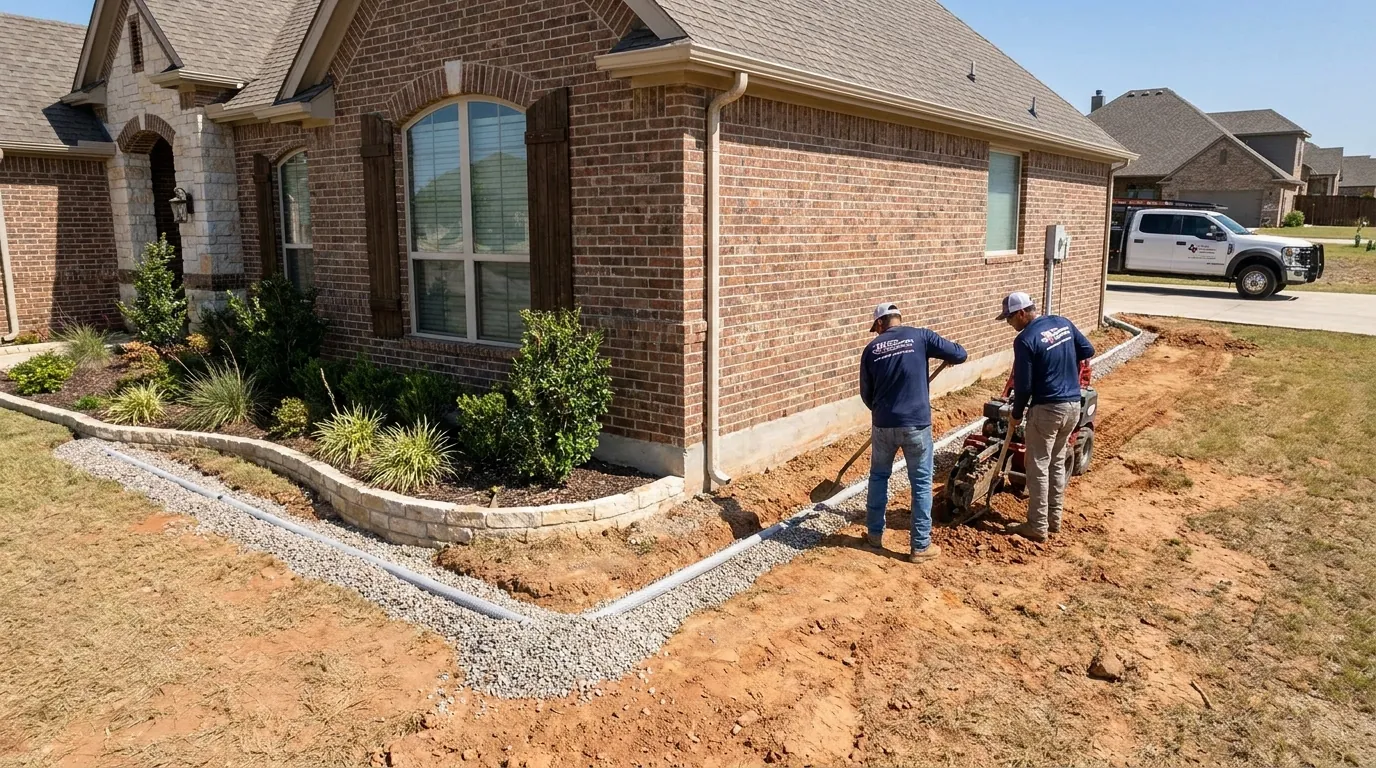
Why drainage matters so much on clay soil
Foundation movement in Waxahachie is really a water problem. Expansive clay swells when it gets wet and shrinks when it dries, and the more extreme those swings are, the more the soil lifts and drops the foundation. Sudden storms dump a lot of water fast, and if that water pools against the house or soaks one side more than another, the ground moves unevenly and the structure follows.
Poor drainage shows up in ways homeowners can spot: water standing next to the foundation hours after rain, soil that has washed away from the perimeter, downspouts that empty right at the wall, mulch beds that stay soggy, and a yard that slopes back toward the house. In summer the opposite problem appears — the soil near the slab dries and cracks while the middle of the yard stays greener.
Drainage correction aims to keep the moisture around the foundation as steady and as far from the wall as possible. It is often done alongside slab foundation repair so the corrected foundation is not undermined again, and a foundation inspection can pinpoint which side of the home is taking on the most water.
How drainage is corrected
The work targets where water enters, pools, and drains around the home.
-
Assess the water path
The crew looks at grading, gutters, downspouts, and low spots to see where water collects and where it should go.
-
Regrade the perimeter
Soil is shaped to slope away from the foundation so surface water runs off instead of pooling at the wall.
-
Redirect roof water
Downspout extensions and buried lines carry gutter water well away from the foundation zone.
-
Add drains where needed
Surface drains or French drains are installed to capture water in chronic low areas and route it off the property.
-
Verify runoff
The system is checked so water clears the foundation area during heavy rain rather than sitting against the slab.
Water pooling near your house?
If rain collects against the foundation or your yard drains the wrong way, correcting it protects the whole structure. Reach out to describe your drainage trouble spots.
Serving Waxahachie and surrounding Ellis County towns.
Frequently asked questions
Can drainage really cause foundation problems?
Yes. Uneven water around the perimeter is the main driver of foundation movement on expansive clay. Water pooling on one side swells that soil while a dry side shrinks, and the resulting tilt is what cracks walls and slabs.
Do I need drainage work if I already had my foundation repaired?
Often, yes. Repair stabilizes the structure, but if water keeps saturating one side of the house the soil will keep swinging between wet and dry. Correcting drainage helps the repair last.
What are the common fixes?
Regrading soil to slope away from the house, extending downspouts, and adding surface or French drains in chronic low areas are the usual solutions. The right mix depends on your lot and where water collects.
Is gutter water a big deal?
It can be. A downspout emptying right at the wall concentrates a lot of roof water in one spot, saturating the clay there. Extending it a few feet out often makes a noticeable difference.