Pier and Beam Leveling in Waxahachie
Pier and beam leveling for older Waxahachie homes with crawl spaces. Signs of settlement, how leveling works, and how clay soil affects the job.
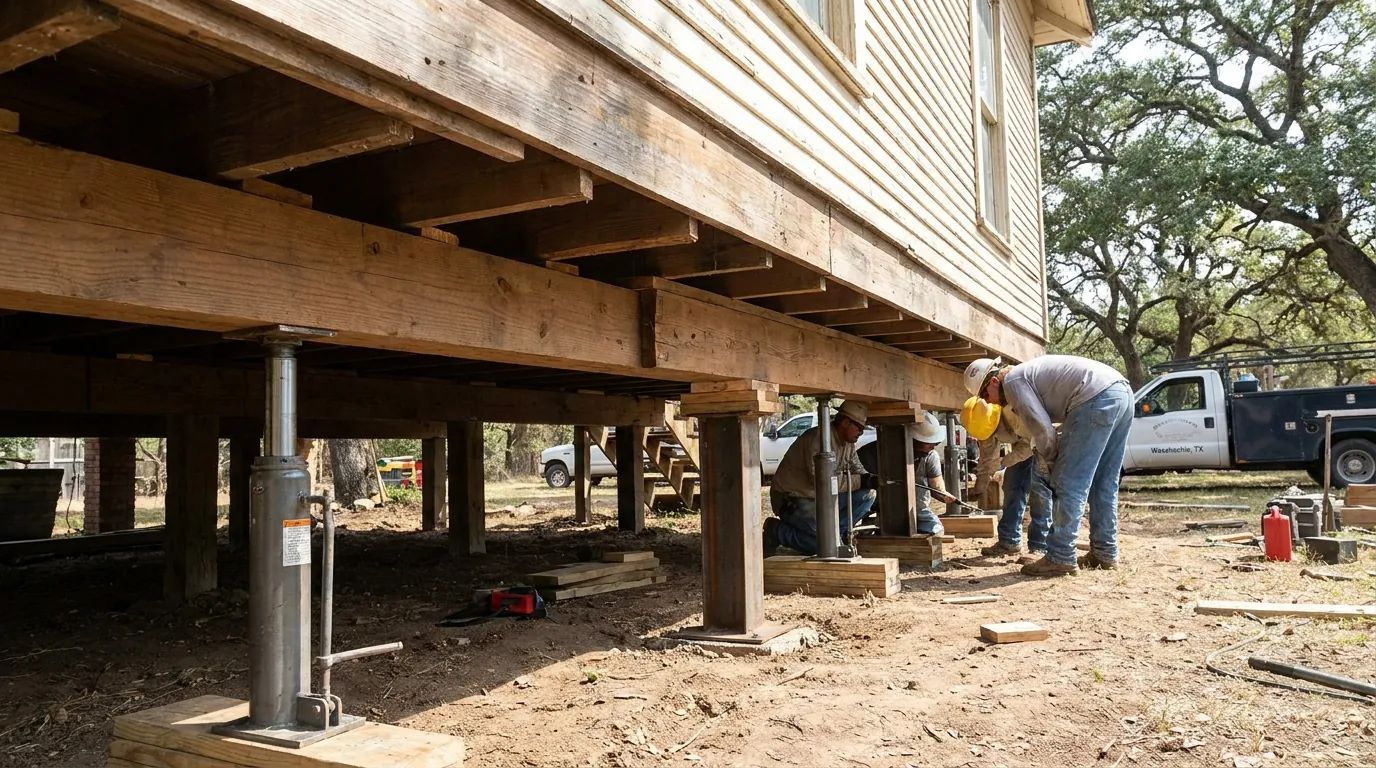
Leveling a pier and beam home in clay country
Many of the older houses in and around Waxahachie were built on pier and beam foundations — a raised structure supported by piers with a crawl space underneath, rather than a solid concrete slab. These homes have one big advantage on our expansive clay soils: they can be adjusted. When a beam sags or a pier settles, the wood framing can be re-shimmed and re-supported to bring the floors back to level.
The trouble usually starts the same way slab problems do. Clay under the piers swells with rain and shrinks in drought, so individual piers rise and fall. Over time the shims compress, wood beams sag between supports, and you begin to feel the floor dip as you walk across a room. Moisture in the crawl space accelerates it by softening the soil and rotting wood members.
Pier and beam leveling is often less disruptive than slab foundation repair because the crew works from underneath. If your crawl space stays damp or the piers themselves are failing, it may also need added support — that overlaps with crawl space support.
How pier and beam leveling is done
The work happens in the crawl space, following the low points identified by measurement.
-
Elevation survey
Floor elevations are measured room by room to find the sagging spans and settled piers that need attention.
-
Inspect the framing
Beams, joists, and existing piers are checked from below for rot, crushed shims, and piers that have sunk into the soil.
-
Add or reset supports
New piers or footings are placed where support is missing, and existing piers are reset onto stable bearing.
-
Shim and lift
The framing is jacked gradually and shimmed to bring the floor back toward level without cracking finishes above.
-
Recheck and secure
Elevations are re-measured and supports are fastened so the corrected floor holds.
Floors dipping in an older home?
If you feel a bounce or slope in the floors of a pier and beam house, an under-house assessment shows what is sagging and why. Get in touch to describe what you are noticing.
Serving Waxahachie and surrounding Ellis County communities.
Frequently asked questions
How is pier and beam leveling different from slab repair?
Pier and beam homes have a crawl space, so the crew works underneath to shim and re-support wood framing. Slab homes are lifted with pressed pilings driven under the concrete. Leveling a pier and beam home is usually less invasive because floors and finishes are not opened up.
Why do my floors feel bouncy or sloped?
Bounce usually means a beam is sagging between supports or a pier has settled, while a slope points to one area dropping more than another. Crawl space moisture and compressed shims are common culprits in older Waxahachie homes.
Can leveling fix a damp crawl space too?
Leveling corrects the floor, but persistent moisture also needs to be addressed or the soil and wood will keep failing. Drainage and crawl space support are often handled alongside the leveling.
Will I need to move out during the work?
Most pier and beam leveling is done from the crawl space with the household in place. The work can cause minor cosmetic movement in drywall and trim that may need touch-up afterward.